
Turn 14 Distribution is a Performance Warehouse Distributor with distribution facilities strategically located in Hatfield, PA, Arlington, TX, Reno, NV, and Indianapolis, IN. Turn 14 Distribution's strategy consists of catering to niche vehicle markets, along with stocking its partner manufacturers' full product lines for quick order fulfillment.
Exclusive Turn 14 Distribution promotions ensure that products are marketed efficiently and correctly to each supplier’s target audience. The company relies upon its dedicated sales specialists—chosen for their experience in each particular market—to service its customers with superior knowledge. In addition, the company’s website offers lens technology to permit customers to view the products available for each individual market most efficiently.
Turn 14 Distribution’s up-to-the-minute online inventory tracking, efficient forecasting, and dedicated Customer Support Department allow the company to cut lead times and keep its customers informed about product fulfillment. The company’s goal is to provide its customers the sales, marketing, and post-sales support needed to succeed in the modern marketplace.
With 1,500,000 sq ft of modern distribution center space, Turn 14 Distribution boasts ground shipping coverage to 60% of the U.S. population in one day and 100% within two days. Globally, Turn 14 Distribution’s competitive freight rates, 'ship to your shop' flat rate shipping, late shipping cutoff times, seven-day-a-week operation, and same day in-stock order fulfillment commitment enable it to service customers both across the United States and the world efficiently.


Turn 14 Distribution's name is derived from the historic Elkhart Lake, WI race track, Road America. At 4.0481 miles in length, with 14 turns, Road America is one of the world's finest and most challenging road courses. It is from the final and 14th turn before the finish line that Turn 14 Distribution's founders drew the inspiration for the company's name.
Specs current as of 2025. Always check the exact CPU model (e.g., Unisoc SC9863A or MediaTek MT6739 contains a G31; MediaTek MT6580 contains a Mali-450).
If you are choosing between two devices, such as budget Android TV boxes or entry-level smartphones, the is the clear choice for a smoother and more future-proof experience.
The Mali-G31 remained. He was not a hero; he was a survivor. He was the entry-level standard, the bare minimum required to call a device a "smartphone" in the modern era. He took the crown, but he wore it heavily. He knew he was the weakest of his lineage, often mocked by his bigger brothers, the G52 and G715.
| Test | Mali-450 MP2 | Mali-G31 MP2 | Gain (G31 over 450) | |-----------------------|----------------|----------------|----------------------| | | 18 fps | 42 fps | 2.3x | | Manhattan 3.0 (ES 3.0) | 5.1 fps | 19.4 fps | 3.8x | | Car Chase (ES 3.1) | Not supported | 14.2 fps | N/A | | Fill rate (MTexels/s) | 1000 | 3200 | 3.2x |
Two names dominate the ultra-budget and legacy device markets: and ARM Mali-450 MP4 .
The ARM Mali series has dominated the low-to-mid-range graphics accelerator market for over a decade. This paper presents a quantitative and architectural comparison between the (2012, Utgard architecture) and the Mali-G31 MP2 (2018, Valhall architecture). Despite a six-year gap, both GPUs coexist in entry-level devices as of 2026. Using synthetic benchmarks, power modeling, and API capability analysis, we demonstrate that while the Mali-G31 MP2 achieves 3.2x higher texture performance per clock and supports modern APIs (Vulkan 1.3, OpenGL ES 3.2), the legacy Mali-450 retains advantages in die area and driver maturity for feature-phone platforms. Our findings guide SoC selection for ultra-low-power IoT and budget mobile devices.
Only supports up to OpenGL ES 2.0 . Many modern games and even some UI elements in newer versions of Android require OpenGL ES 3.0 or higher to run.


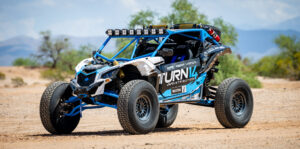
Turn 14 Distribution believes that the best work comes from engaged team members who are passionate about what they do; this is why over ninety percent of the company’s employees are automotive and powersports enthusiasts. Across all departments and job titles, Turn 14 Distribution’s staff not only care about the company they work for but the industry it helps support. From Professional Driver sponsorship to heavy employee presence at hundreds of shows and events, Turn 14 Distribution immerses itself entirely in the automotive and powersports industries because of its passion for these industries.
Specs current as of 2025. Always check the exact CPU model (e.g., Unisoc SC9863A or MediaTek MT6739 contains a G31; MediaTek MT6580 contains a Mali-450).
If you are choosing between two devices, such as budget Android TV boxes or entry-level smartphones, the is the clear choice for a smoother and more future-proof experience. Mali-g31 Mp2 Vs Mali-450
The Mali-G31 remained. He was not a hero; he was a survivor. He was the entry-level standard, the bare minimum required to call a device a "smartphone" in the modern era. He took the crown, but he wore it heavily. He knew he was the weakest of his lineage, often mocked by his bigger brothers, the G52 and G715.
| Test | Mali-450 MP2 | Mali-G31 MP2 | Gain (G31 over 450) | |-----------------------|----------------|----------------|----------------------| | | 18 fps | 42 fps | 2.3x | | Manhattan 3.0 (ES 3.0) | 5.1 fps | 19.4 fps | 3.8x | | Car Chase (ES 3.1) | Not supported | 14.2 fps | N/A | | Fill rate (MTexels/s) | 1000 | 3200 | 3.2x | Specs current as of 2025
Two names dominate the ultra-budget and legacy device markets: and ARM Mali-450 MP4 .
The ARM Mali series has dominated the low-to-mid-range graphics accelerator market for over a decade. This paper presents a quantitative and architectural comparison between the (2012, Utgard architecture) and the Mali-G31 MP2 (2018, Valhall architecture). Despite a six-year gap, both GPUs coexist in entry-level devices as of 2026. Using synthetic benchmarks, power modeling, and API capability analysis, we demonstrate that while the Mali-G31 MP2 achieves 3.2x higher texture performance per clock and supports modern APIs (Vulkan 1.3, OpenGL ES 3.2), the legacy Mali-450 retains advantages in die area and driver maturity for feature-phone platforms. Our findings guide SoC selection for ultra-low-power IoT and budget mobile devices. The Mali-G31 remained
Only supports up to OpenGL ES 2.0 . Many modern games and even some UI elements in newer versions of Android require OpenGL ES 3.0 or higher to run.
If you think we are missing a part that should be in our system, please use the form below to submit a request. Thanks!