|
|||||||||||||||
|
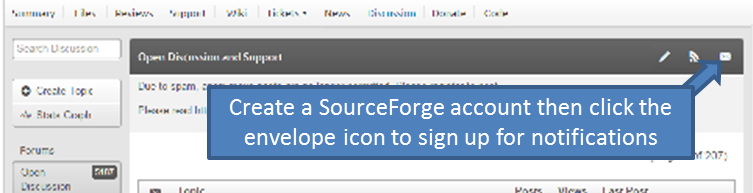
FreeRTOS Support ArchiveThe FreeRTOS support forum is used to obtain active support directly from Real Time Engineers Ltd. In return for using our top quality software and services for free, we request you play fair and do your bit to help others too! Sign up to receive notifications of new support topics then help where you can.
Loading
FreeRTOS tasks can interrupt USB stack implementation?Posted by ddudas on September 24, 2015 Hi all, I'm using ST's CubeMX implementation on a F4 discovery board. I use ST's USB middlewares with FreeRTOS. When I get a special OutputReport from PC side I have to answer nearly immediately (in 10-15 ms). Currently I cannot achieve this timing and it seems my high priority tasks can interrupt the USB callback. What do you think, is it possible? Because it's generated code I'm not sure but can I increase the priority of the USB interrupt (if there is any)? Thank you, David FreeRTOS tasks can interrupt USB stack implementation?Posted by rtel on September 24, 2015 10 to 15 ms is very slow, so I'm sure its possible. Where is the USB callback function called from? If it is an interrupt then it cannot be interrupted by high priority RTOS tasks. Any non interrupt code (whether you are using an RTOS or not) can only run if no interrupts are running. Without knowing the control flow in your application its hard to know what to suggest. How is the OutputReport communicated to you? By an interrupt, a message from another task, or some other way? FreeRTOS tasks can interrupt USB stack implementation?Posted by ddudas on September 24, 2015 The callback which receive the data from PC is called from the OTGFSIRQHandler (it's the part of the HALPCDIRQHandler function). I think the problem is SysTickHandler's priority is higher than OTGFSIRQHandler and it's cannot be modified, but the scheduler shouldn't interrupt the OTGFSIRQHandler with any task handled by the scheduler. Am I wrong that the scheduler can interrupt the OTGFS_IRQHandler? FreeRTOS tasks can interrupt USB stack implementation?Posted by rtel on September 24, 2015 that tells a narrative through a series of large, impactful images. 2. Structure the Content A standard paper on visual media should follow this flow: Introduction If you want truly "big" pictures, NASA provides some of the largest files available to the public—massive composites of galaxies and planets that can be several gigabytes in size. A person's worth, reduced to a view, A like, a comment, a validation anew. But what of the soul, the heart that beats, The dreams, the passions, the unseen retreats? In the foreground, a small, delicate mirror lies shattered, symbolizing the broken and often unattainable standards of beauty. Surrounding the mirror are words, like "self-worth" and "validation," written in a circular motion, as if they're being swept away. Formats like PNG or TIFF preserve detail (lossless), whereas JPEG compresses data to save space, which can lead to "pixelation" if the compression is too high. 4. How to Optimize Large Images Once you have the files, managing them requires specific tools: If you have a small photo that you need to make "big," tools like Topaz Gigapixel AI or free online upscalers use machine learning to add pixels without losing clarity. FreeRTOS tasks can interrupt USB stack implementation?Posted by ddudas on September 24, 2015 Thank you for the answer, I think I'm a bit confused with the Cortex ISR priorities :-) What I can observe is if I use a much higher osDelay in my high priority task I can respond for the received USB message much faster. This is why I think tasks can mess up with my OTG interrupt.
Copyright (C) Amazon Web Services, Inc. or its affiliates. All rights reserved.
|
||||||||||||||



NXP tweet showing LPC5500 (ARMv8-M Cortex-M33) running FreeRTOS.
Meet Richard Barry and learn about running FreeRTOS on RISC-V at FOSDEM 2019
Version 10.1.1 of the FreeRTOS kernel is available for immediate download. MIT licensed.
View a recording of the "OTA Update Security and Reliability" webinar, presented by TI and AWS.
FreeRTOS and other embedded software careers at AWS.